
Can I Use Contact Adhesive on PVC? Why Datasheets Say “Not Suitable for Plasticised PVC”
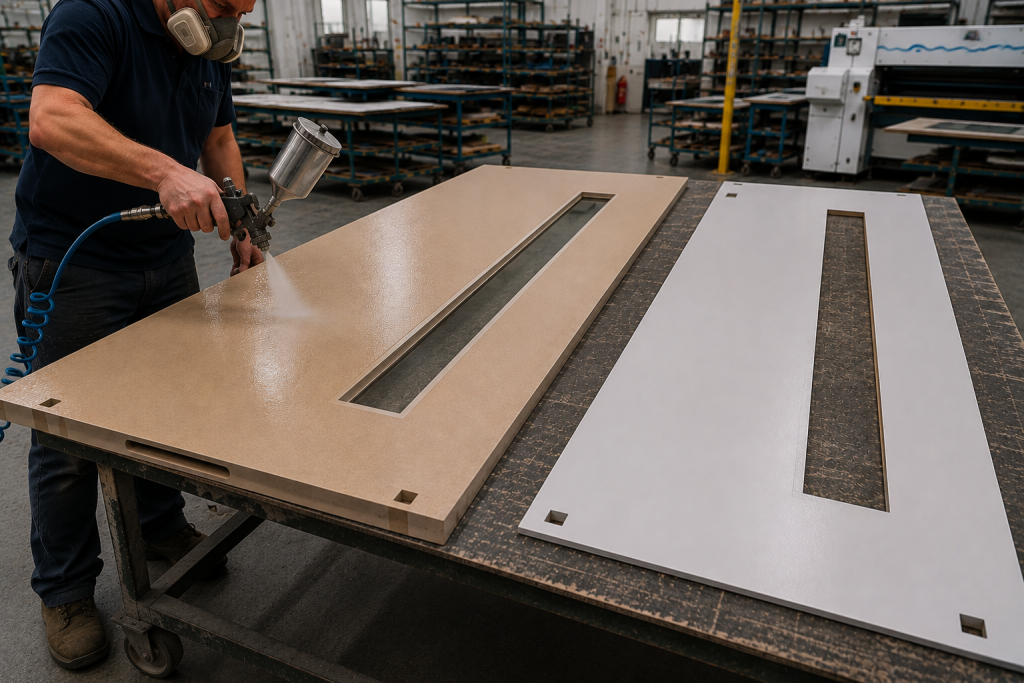
Quick answer: It depends entirely on which PVC you mean — and the datasheet warning trips up a lot of people. Rigid PVC (uPVC) sheet bonds perfectly well with a standard contact adhesive; it’s one of the most common applications there is. Plasticised (flexible) PVC is a different material with a built-in bond-killer, and that’s what the warning is about. Here’s the difference, why it matters, and how to tell which one you’ve got.
This question comes up constantly: someone is bonding PVC sheet to doors or panels, reads “not suitable for plasticised PVC” on the adhesive datasheet, and stops dead — does that mean their job is about to fail? Nine times out of ten, no. But the one time in ten matters, so it’s worth understanding what the warning actually means.
Plasticised vs rigid PVC: two very different materials
PVC on its own is a hard, rigid plastic. To make the soft, flexible version — vinyl upholstery, flexible trims and profiles, soft-feel edging — manufacturers blend in plasticisers: oily compounds that can make up a third or more of the material by weight.
Rigid PVC — the sheet you’d bond to a door, hygienic wall cladding, uPVC fabrications — contains little or none. The “u” in uPVC literally stands for unplasticised.
Same polymer, completely different behaviour when you try to glue it.
Why plasticisers kill adhesive bonds
Here’s the problem: plasticisers don’t stay put. They slowly migrate out of flexible PVC and into whatever is touching it — including your adhesive film. Over weeks and months, the plasticiser soaks into the glue line and softens it. The bond doesn’t snap; it creeps. Panels slide, edges lift, and the failure shows up long after the job looked perfect.
That’s the specific failure the datasheet is warning you about. It isn’t saying the adhesive won’t stick to flexible PVC — it usually grabs fine on day one. It’s saying the bond won’t last, because the material itself slowly sabotages the glue. Bonding flexible PVC reliably needs an adhesive specifically formulated to resist plasticiser migration — typically a polyurethane or a plasticiser-resistant grade — not a standard contact adhesive.
So does the warning apply to rigid PVC sheet?
No. Rigid, unplasticised PVC doesn’t contain meaningful plasticiser, so the migration mechanism the warning exists for simply isn’t there. Bonding rigid PVC sheet to timber doors — hygiene cladding, protection panels, laboratory and healthcare fit-outs — is a routine, well-proven contact adhesive application.
Three checks before you spray:
- Confirm the sheet really is rigid. Most PVC sheet sold for cladding and door protection is uPVC — but some decorative and “semi-rigid” sheets carry a small plasticiser loading to help them form around curves. If the sheet has any bend or soft feel to it, ask the sheet manufacturer for confirmation before committing to a big run.
- Prep the surface. PVC bonds well but hates contamination. A wipe-down to remove release agents and handling grease — and a light abrade on gloss surfaces — makes the difference between adequate and excellent.
- Cover the whole panel. PVC expands and contracts with temperature far more than the timber underneath it. Full, even adhesive coverage — not stripes and dabs — stops thermal movement peeling the sheet from an edge inward. On large panels, follow the coverage weight on the datasheet rather than eyeballing it.
And one that’s nothing to do with adhesive: if you’re facing fire doors, adding a bonded sheet can affect the door’s certification. Check with the door manufacturer or your fire door inspector before modifying anything certified — no adhesive choice fixes a compliance problem.
How do I tell which PVC I’ve got?
The practical tests: rigid PVC is stiff — a 2–3mm sheet won’t fold without cracking, and it feels hard and dry to the touch. Plasticised PVC bends easily, feels slightly soft or rubbery, and often has a faint characteristic odour (that “new shower curtain” smell is plasticiser). If in doubt, the sheet supplier’s technical datasheet will state it — look for “PVC-U” or “uPVC” (fine for contact adhesive) versus “PVC-P”, “flexible” or “plasticised” (needs a specialist adhesive).
The honest bottom line
Datasheet exclusions exist for a reason, but they’re only useful if you know which material they’re talking about. “Not suitable for plasticised PVC” rules out soft, flexible vinyl — it does not rule out rigid PVC sheet, which remains one of the most common and dependable contact adhesive applications in the trade. Know your sheet, prep it properly, cover it fully, and the bond will outlast the door.
Not sure which PVC you’re dealing with, or whether your adhesive is right for the job? Send us the sheet spec and we’ll tell you straight — call 02392 233 310.
This article is general guidance. Always confirm suitability for your specific materials with an adhesion test before production — we can help you set one up.