
Why Is My UF Glue Going Off Too Fast in Hot Weather — and What Can I Do About It?
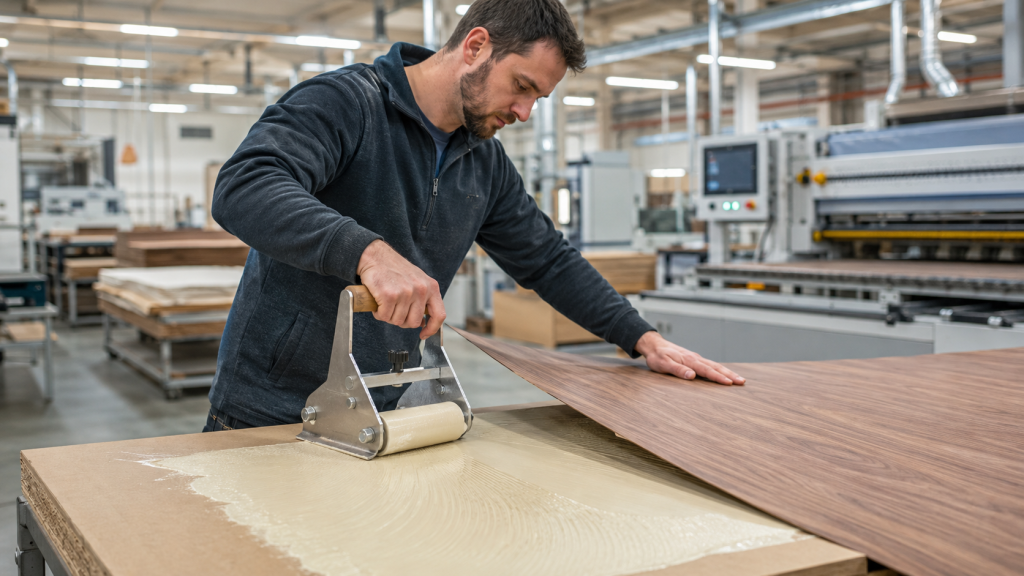
Quick answer: Heat is the enemy of UF pot life — even a few degrees of summer warmth in the workshop can cut your working time dramatically. The fixes: adjust your hardener addition (and with our Anchor UF systems, that means adding more, not less — more on that counterintuitive point below), cool the mix and the stored materials, and mix smaller batches more often. Here’s the full picture.
Every July and August the phone starts ringing with the same problem: a UF glue mix that behaved itself all spring is suddenly gelling in the pot before the job’s finished. Nothing has changed — same resin, same hardener, same addition rate — except the weather. And that’s the whole story: nothing is wrong with the glue. It’s doing exactly what the chemistry says it should do at the new temperature.
Why does heat shorten UF pot life so much?
Urea formaldehyde is a condensation resin cured by an acid catalyst — the hardener. The cure reaction is driven by acidity and temperature together, and its speed climbs steeply as the mix warms up. As a rough rule of thumb for resins of this type, every 10°C rise in temperature roughly halves the working life of the mix — and the effect compounds: a mix sitting at 28°C in a summer workshop can have only a fraction of the pot life the same mix had at 18°C in April.
It catches people out precisely because nothing visible has changed. The datasheet pot life is quoted at 20°C — and on a hot day, your pot isn’t at 20°C.
The counterintuitive fix: check your hardener addition — you may need more, not less
Here’s where the generic internet advice will steer you wrong. The textbook logic says “hardener is the accelerator, so add less of it to slow things down.” With some UF systems that’s true. With our Anchor UF range, it’s the opposite — and it’s printed in black and white on the datasheet:
| Resin | 1554 addition (% by weight) | Pot life at 20°C | Pressing time at 70°C |
| Anchor 1528 | 10% | 1.5 hours | 65 secs |
| Anchor 1528 | 15% | 2 hours | 85 secs |
| Anchor 1528 | 20% | 3 hours | 110 secs |
With Anchor 1554 liquid hardener, going from 10% to 20% addition doubles your pot life on 1528 — from 1.5 hours to 3 hours at 20°C. The formulated hardener does more than just catalyse: increasing the addition brings the mix’s balance of components (and its water content) with it, and the practical result is a slower, more forgiving pot. So the summer adjustment for these systems is to run towards the top of the permitted addition range, not the bottom.
Two rules that come with that:
- Stay inside the range on the TDS. The 10–20% band exists because everything in it produces a sound cure. Don’t freelance outside it in either direction — that’s where weak glue lines live.
- Adjust your pressing time to match. Longer pot life isn’t free — the whole system runs slower. At 70°C, 1528 needs 65 seconds in the press at 10% addition but 110 seconds at 20%. If you increase the hardener and keep your old press cycle, you’ll be pulling under-cured panels. Change both numbers together, straight off the table.
And one moisture note: 1554 is a liquid hardener, so a higher addition also puts a little more water into the mix. On thin or highly figured veneers, watch for bleed-through and grain raise, and remember the substrate spec — 5–15% moisture content with no more than 3% differential between surfaces.
Cool the mix — the fix that attacks the actual cause
The hardener adjustment buys you working time, but the root cause is temperature, and every degree you claw back pays you twice. The practical moves:
- Store resin and hardener somewhere cool — not against a sunny wall, not in the roof space above the press. Material that starts at 18°C instead of 28°C gives you a head start before the clock even begins.
- Keep the glue pot out of the sun and away from the press. Radiant heat from a hot press quietly cooks the pot sitting next to it.
- Mix smaller batches, more often. A big pot generates and holds its own heat (the cure reaction is exothermic) and spends longer in the danger zone. Little and often wins in summer.
- For serious volume, consider a water-jacketed or cooled mixing vessel. Holding the mix 10°C cooler roughly doubles its working life back.
What not to do
- Don’t under-catalyse below the TDS minimum to stretch the pot. An under-cured UF glue line looks fine on the day and fails months later — it’s the most expensive kind of saving there is.
- Don’t thin the mix with extra water beyond the specification to keep it workable. You’ll change the spread rate, the moisture balance and the bond strength all at once.
- Don’t press on with a mix that’s already thickening. Once the gel has visibly started, the adhesive’s ability to wet the surface and transfer properly is going with it. Bin it and mix fresh — the resin you save isn’t worth the delaminated door it costs.
- Don’t forget it works in reverse. Come October, a 20% addition mixed in a cold workshop will feel like it takes forever — and a cold press cycle that was marginal in July may not cure at all at 10°C. Seasonal adjustment cuts both ways.
The honest bottom line
A UF mix gelling early in a heatwave isn’t a faulty batch — it’s chemistry responding to temperature exactly as the datasheet says it will. The answer is written on the same datasheet: adjust the hardener addition within the permitted range (for our Anchor systems, upward), match your press times to the new addition rate, and take cheap, practical steps to keep the materials and the mix cool. Do those three things and the same glue that’s frustrating you in July will run sweetly through August.
Fighting short pot life right now? Call us on 023 9223 3310 with your resin, hardener and addition rate to hand, and we’ll talk you through the right summer settings for your setup — it usually takes about five minutes.
This article is general guidance based on Anchor UF Resin 1528 with Anchor 1554 hardener. Figures quoted are from the current technical datasheet at 20°C — always work from the TDS for your specific products and confirm suitability with a trial.